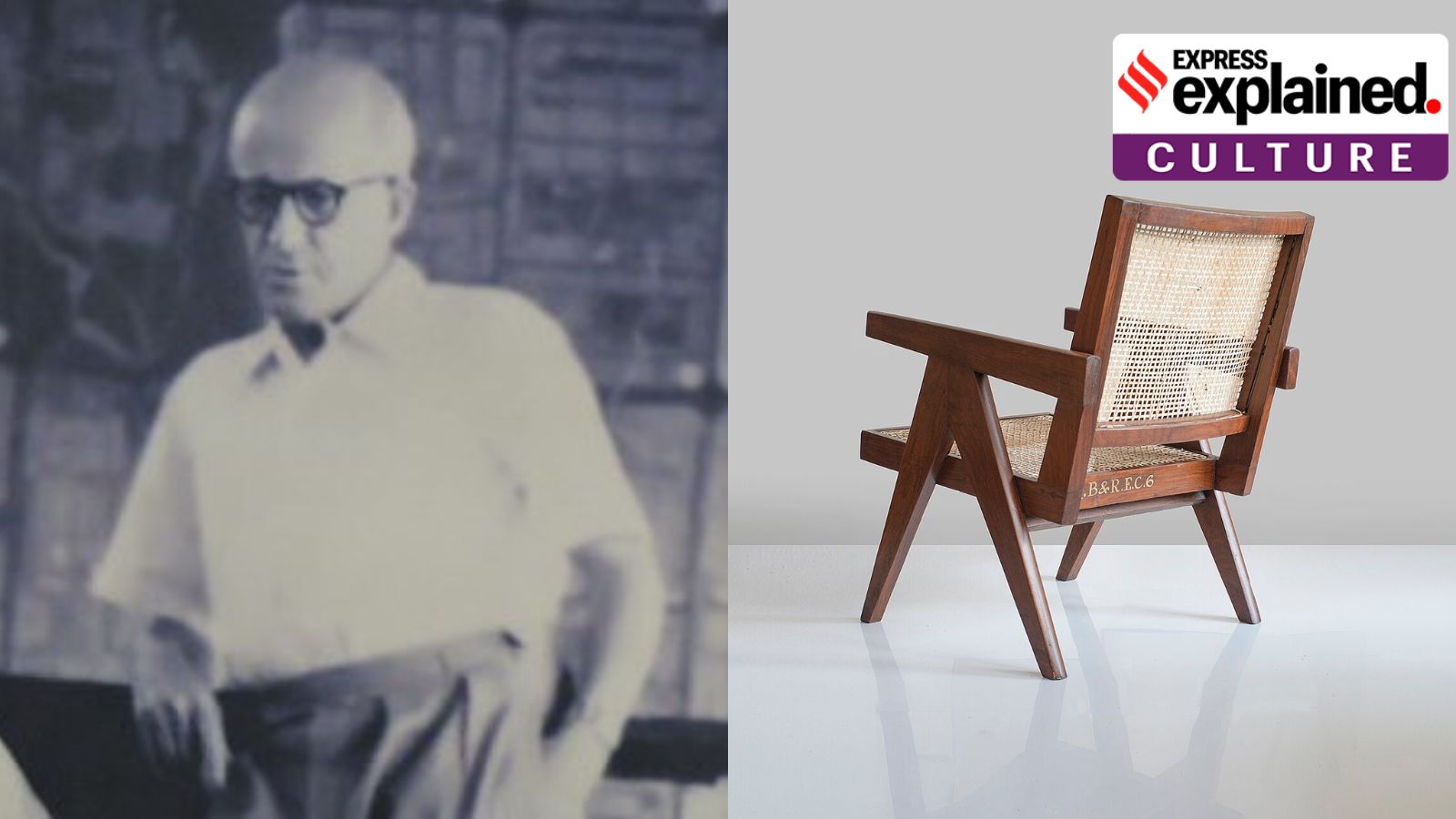
 Popularly recognised by its distinctive inverted V-shaped, or compass, legs, the Chandigarh chair is an iconic piece of furniture designed in the 1950s by Pierre Jeanneret. (Wikimedia Commons, Express File)
For years, the Chandigarh administration has been fighting to stop the city’s iconic furniture from disappearing into private collections overseas. Last week, it notched up a major success by getting the auction of two original Pierre Jeanneret chairs in France stopped.
The episode puts the spotlight on the legendary Chandigarh chair, a piece of furniture that once gathered dust in government storerooms but today sells for millions at international auctions. So what makes this seemingly simple chair so special?

What is the Chandigarh chair?
Popularly recognised by its distinctive inverted V-shaped, or compass, legs, the Chandigarh chair is an iconic piece of furniture designed in the 1950s by Pierre Jeanneret, the cousin and collaborator of Charles-Édouard Jeanneret — better known as Le Corbusier, the Swiss-French architect who, along with his team, designed Chandigarh from scratch in the early 1950s.
Pierre Jeanneret served as the city’s first resident chief architect from 1951 to 1965. After his death in 1967, his ashes were scattered in Sukhna Lake, in keeping with his wish. While Le Corbusier focused on the city’s overall layout and landmark buildings such as the Capitol Complex, Jeanneret designed much of its furniture and everyday civic infrastructure.
Rajnish Wattas, former principal of the Chandigarh College of Architecture, says the city’s modernist architecture, with its clean lines and exposed concrete, demanded furniture that matched its aesthetic. “You couldn’t have had Victorian chairs in such buildings, so Jeanneret designed these very elegant, functional and comfortable chairs,” Wattas told The Indian Express.
Jeanneret worked with a team of architects popularly called the Chandigarh Collective. One of its key members was the then-28-year-old Urmila Eulie Chowdhury, the daughter of an Indian diplomat who was fluent in French and English. She helped adapt the furniture to Indian proportions and everyday needs.
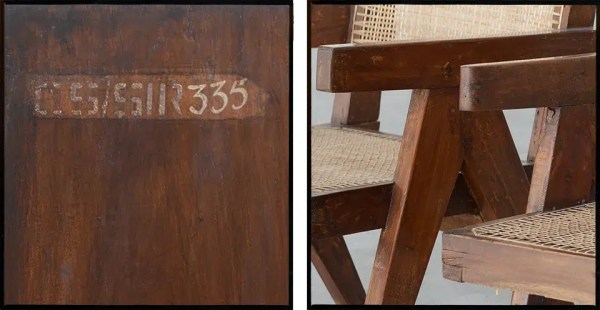 Source: Pierre Jeanneret Gallery, Chandigarh
The chairs were mass-produced by local carpenters in government workshops using teak wood and cane (rattan), materials well-suited to the Indian climate. Designed to provide good back support, they soon became a common sight in government offices, hospitals, educational institutions and public buildings across Chandigarh.
Not all Chandigarh chairs were the same. Versions made for the Capitol Complex featured bright yellow or red leather upholstery with padding and rounded armrests; some can still be seen in the Haryana Assembly foyer. The chairs made for Panjab University — whose iconic lotus-shaped Gandhi Bhavan was also designed by Jeanneret — had modified armrests that allowed users to take notes comfortably.
French designer Joseph Dirand famously described them as “simple, so minimal, so strong”.
When did these chairs become global collectables?
For decades, Chandigarh residents took the chairs for granted. After years of use, many were replaced by steel furniture and pushed into storerooms or junkyards.
Europe “discovered” them around the early 2000s. Beginning in the late 1990s, Parisian antique dealers, including Eric Touchaleaume (Galerie 54), François Laffanour (Galerie Downtown) and Patrick Seguin (Galerie Patrick Seguin), began buying them at throwaway prices from scrap dealers, junkyards, and government auctions. At the time, many local officials and residents regarded them as little more than outdated junk.
The Indian Express has previously reported on French dealers, including one trio, who even offered to give new Godrej chairs for old Chandigarh furniture.
The chairs first found favour in French restaurants before attracting celebrities such as the Kardashians. Today, original Chandigarh chairs are part of the permanent collections of the Victoria and Albert Museum in London and the Museum of Modern Art in New York.
When did they reach international auction houses?
In 2004, Sotheby’s auctioned a collection of Chandigarh furniture. Christie’s followed with a similar sale three years later. Prices have soared ever since. Starting bids that were once around Rs 14 lakh per chair have climbed dramatically. A pair was once sold for about Rs 42.5 lakh at an auction in Chicago, while Parisian auction houses such as Piasa have fetched as much as Rs 78 lakh or more for select pieces.
How can you identify an authentic Chandigarh heritage chair?
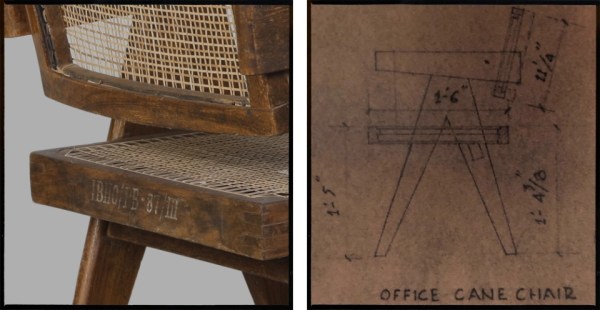 Source: Pierre Jeanneret Gallery, Chandigarh
According to Sumit Kaur, Chandigarh’s chief architect from 2008 to 2014, most vintage pieces still carry inventory markings from their government days.
For instance, a chair marked “PU Chem/55” would have come from Panjab University’s Chemistry Department, while one marked “PGI/W/CH-0202” would have originated from PGIMER (Postgraduate Institute of Medical Education and Research). Carbon dating of the wood can also help establish its age.
How has the UT administration responded?
Over the years, the Chandigarh administration, which has a heritage protection cell, has formally recognised this furniture as part of the city’s listed heritage. The first comprehensive inventory of sketches, furniture and models was ordered in 1996. Sumit Kaur tells The Indian Express that in the early 2000s, government departments were sensitised and asked to prepare detailed inventories with the help of professional teams.
“I remember we had sent out letters to various embassies requesting them to stop auctions of heritage furniture,” she said.
A Ministry of Home Affairs order dated February 22, 2011, prohibits the export of Chandigarh heritage articles outside India and also restricts their transfer, even between government buildings, without authorisation.
Last week, the Union Territory’s administration stepped in to stop the auction of two Chandigarh chairs, estimated at €5,000-€7,000 each by François Epin in France, and registered FIRs in the matter.
Veterans such as M N Sharma, Chandigarh’s first Indian chief architect, who died in 2016, had long campaigned to preserve the city’s material heritage, including its furniture, through initiatives like the Save Chandigarh Campaign. These days, city-based lawyer Ajay Jagga continues to keep track of auctions involving Chandigarh furniture.
What next?
Interest in Chandigarh’s iconic furniture has seen a revival within the city itself. Pioneering residents and lawyers such as Mac Sareen continue to use original Jeanneret chairs in their offices. Local craftsmen make replicas; inmates of Burail jail, wedged between Chandigarh and Mohali, also manufacture and sell these chairs from their outlet in Sector 22.
Five years ago, Wattas proposed setting up a furniture museum in the Press Building in Sector 19. “It was accepted, but is yet to see the light of day,” he says.
