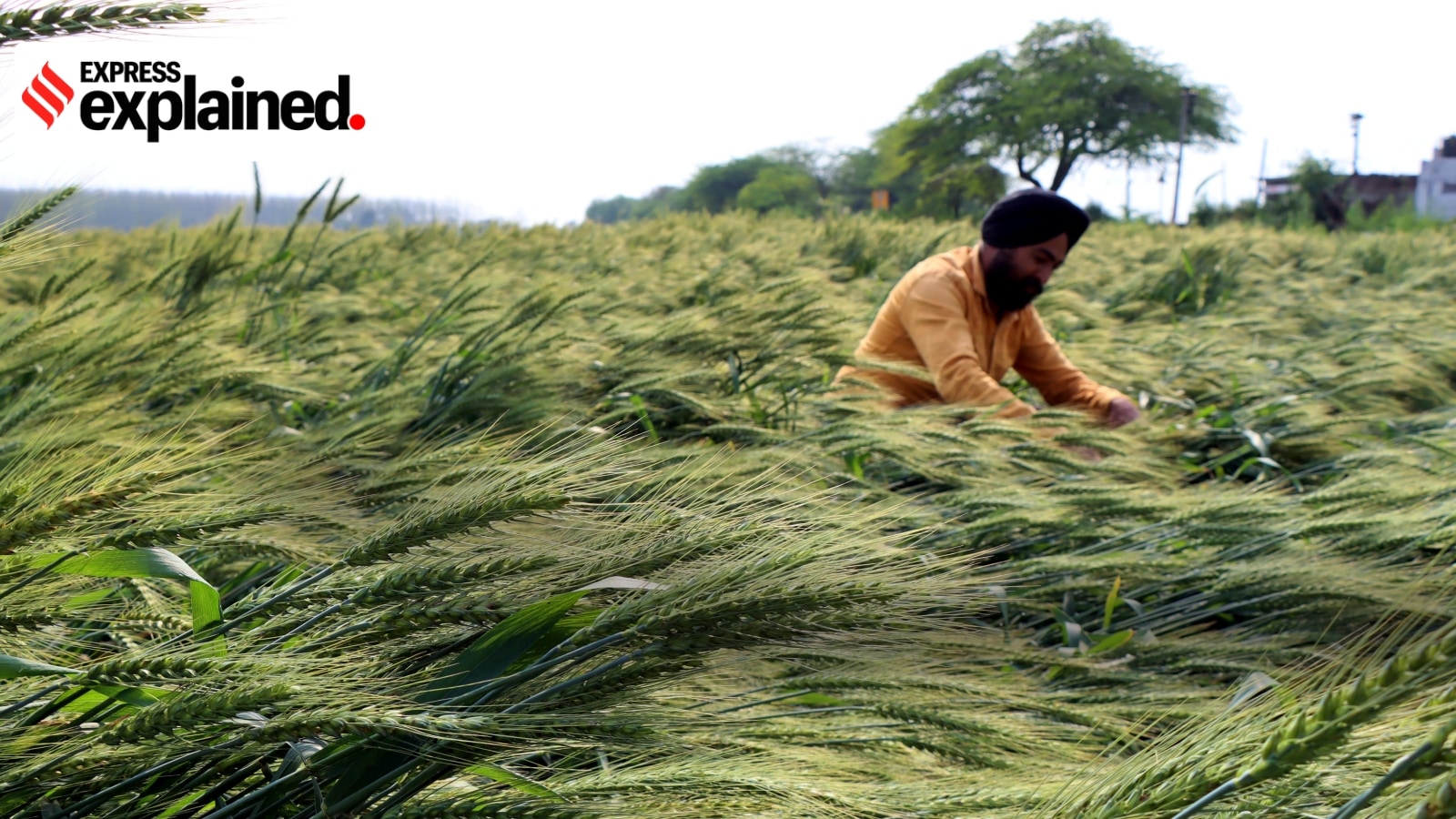
 A wheat field in Punjab's Ludhiana. Gurmeet Singh/File
Farmers in Punjab who own as little as an acre of land can now set up farm stays on it under a new state government policy.
The Farm Stay Policy 2026 seeks to boost tourism, provide farmers with an additional source of income and strengthen the rural economy by reducing dependence on traditional crop cycles. Here’s what to know.

Punjab’s Farm Stay Policy
The Punjab Cabinet on Friday cleared the Farm Stay Policy, 2026 which seeks to promote experiential tourism in the state’s countryside by turning farms into comfortable stay options.
Such homestays, which have to be registered, will enjoy several incentives under the Punjab Tourism & Hospitality Policy, 2026. These include capital subsidy of up to 10% of eligible investment (maximum Rs 5 crore), 75% reimbursement of net state goods and services tax, financial support for energy and environment audits, and full reimbursement for quality and environmental certifications (up to Rs 20 lakh).
Additional benefits include domestic electricity rates, exemption from Change of Land Use fees, simplified approvals, easy credit through cooperative banks and marketing support. The state will also present annual awards for excellence in categories such as “best sustainable farm stay” and “best community-engaged farm stay” to recognise outstanding performers.
The government says the flagship initiative will help boost tourism growth, expand rural entrepreneurship and advance community development. The government sees this as an important move towards economic diversification, enabling farming families to generate additional predictable income through accommodation, farm-to-table meals, experiential activities and sale of local produce, crafts and cuisines.
Definition and eligibility criteria
Any farmer or landowner with a minimum of one acre of agricultural land can apply. The unit must have at least two lettable rooms (maximum nine rooms and 18 beds) and offer at least two experiential activities such as farm tours, tractor or bullock cart rides, dairy visits, fisheries, or local shopping.
Construction is strictly regulated with maximum 10% ground coverage, floor area ratio (FAR) of 1:0.20, two storeys, and height up to nine metres. FAR measures a building’s total usable floor area divided by the total area of its plot, defining the maximum permissible built-up area (or development) allowed on a piece of land.
Both existing residential premises (with owner living on-site) and new standalone setups on farmland are allowed. Existing units registered under the 2021 scheme must re-register within 180 days. The policy does not cover regular farmhouses defined under urban planning rules.
Registration and renewal process
Registration is fully online through the FastTrack Punjab Portal and must be completed within 21 working days. A single window system, minimal documentation, and a dedicated Facilitation Cell will guide applicants.
Initial registration is valid for five years, while renewals (for three years) are based largely on self-certification. Random inspections have been done away with; checks will occur only on genuine written complaints. The government feels this farmer-friendly approach is expected to encourage widespread participation across Punjab.
Operators are required to submit self-certification regarding waste management, wastewater treatment, and pollution control. Every unit must have a septic tank with a soak pit, bio-digester, or connection to a sewer line. Solid waste has to be segregated, biodegradable waste composted on-site, and open burning or dumping is strictly prohibited.
Greywater reuse for gardens and adoption of solar energy, rainwater harvesting, and organic farming are strongly encouraged. The government believes responsible tourism will protect Punjab’s natural resources while creating green livelihood opportunities.
Responsibilities and challenges
Once registered, operators must maintain high standards of hygiene, safety, and guest services, including potable water, fire-fighting equipment, first-aid kits, and clean surroundings. They are required to submit monthly guest occupancy reports online and report foreign tourists through Form C in real time. Owners must display the registration certificate prominently and inform the department of any major changes. A Facilitation Cell has been set up to resolve grievances and provide continuous support.
Overall, the policy attempts to strike a balance between simplicity for operators and quality assurance for visitors. This policy is being seen as a forward-looking initiative that can strengthen Punjab’s rural economy through tourism-led diversification while preserving the state’s rich agrarian heritage and traditions.
There are challenges, however, as infrastructure gaps remain a major concern, as many villages are not yet equipped to meet tourists’ expectations of clean rooms, reliable roads, internet connectivity, and proper sanitation, especially in the pockets of agriculture fields.
In addition, running a farm stay requires a different skill set from farming, making training in hospitality, marketing, and customer service essential. There is also the risk of unequal benefits, with larger or better-located farmers likely to gain more while smaller farmers may struggle to attract visitors.
