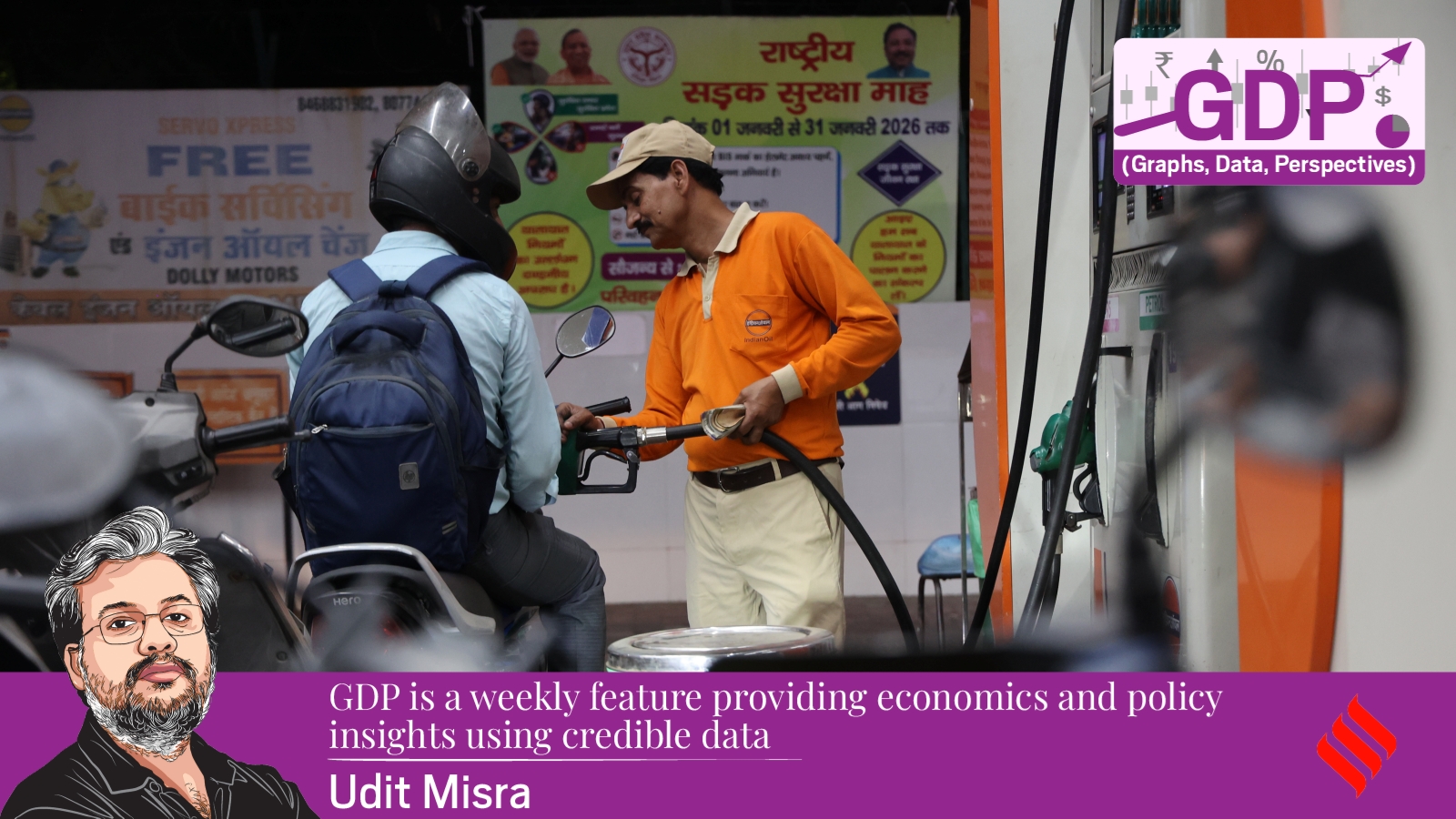
 Petrol and diesel price hikes were implemented in May as the West Asia war drove up crude oil prices. Tashi Tobgyal
The retail inflation rate is set to breach the Reserve Bank of India’s (RBI) target level of 4%, according to an analysis by the Centre for Monitoring Indian Economy (CMIE). The next set of inflation data, covering June, will be released Monday (July 12).
Inflation rate refers to the rate at which the general price level increases over the past 12 months. An inflation rate of 4% implies that the general price level is now 4% higher than a year ago. In other words, a basket of goods and services that could be purchased for Rs 100 a year ago requires consumers to spend Rs 104 now.

As chart 1 (below) shows, retail inflation fell sharply from more than 6% in October 2024 to zero in October 2025. Since then, however, the figure has started edging up — a trend that has been exacerbated by supply constraints in the wake of the war in West Asia. Even so, retail inflation stayed below the RBI’s target rate of 4% for the past 16 months. In May, the retail inflation was 3.93%. According to CMIE’s estimates, the overall retail inflation in June is likely to be 4.25%.
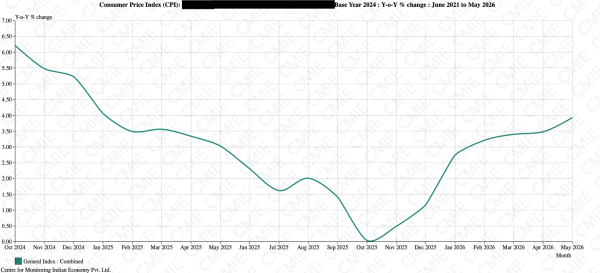 The retail inflation rate has been creeping up
Reasons for higher inflation
There are two main triggers for the anticipated jump in headline inflation rate, according to CMIE.
One, is the sub-category of “transport” inflation. In the overall index used to calculate inflation, this sub-category has a weight of around 9%. According to CMIE’s estimates, transport inflation, which had largely been close to zero for most of this year, is likely to have grown by 4.6% in June.
This sharp spike in transport-related inflation (see chart 2, below) in June shows the full impact of the petrol and diesel price hike that were first implemented in May.
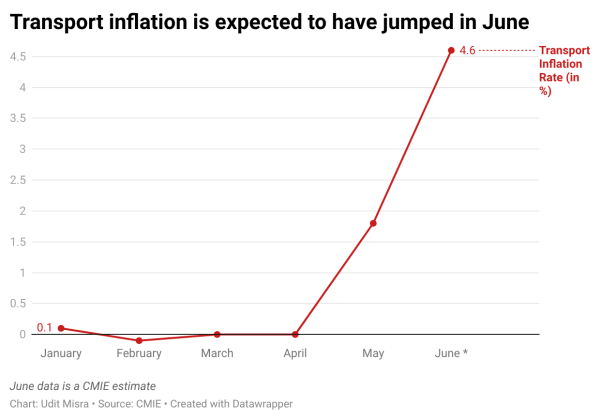 Transport inflation is on the rise, driven mostly by the West Asia war
There are other factors that have likely pushed up transport costs. “…travel fares would have continued to rise, reflecting the higher fuel costs. And major automobile manufacturer Maruti raised vehicle prices from June to offset rising input costs. Inflation firmed across all components of the transport division, with the fuel price hike remaining the principal driver,” notes CMIE’s analysis.
The second sub-category that has experienced higher inflation in June has to do with different types of fuels. The government increased domestic LPG prices in early June, marking the second hike since March. LPG prices in June averaged Rs 947 per 14.2 kg cylinder across major cities, up from Rs 923 in May. Prices have cumulatively increased by more than Rs 80 since March.
“Higher LPG prices are also expected to have lifted the cost of substitute fuels such as firewood and dung cakes. Consequently, inflation in the electricity, gas, and other fuels category is estimated to have risen to 1.9 per cent from 0.8 per cent in May,” says the CMIE analysis.
Impact of high inflation on growth and monetary policy
Higher inflation is bad news for economic growth. Fast-rising prices drag down the real economic growth rate because they reduce a consumer’s power to purchase goods and services with the same level of income.
Things get worse when the RBI’s policy action is taken into consideration.
Although at 4.25%, retail inflation is still very much within the RBI’s comfort band of 2% to 6%. Basically if the inflation rate stays within this zone, the RBI is unlikely to sharply calibrate its monetary policy.
But if the inflation rate stays outside this comfort zone, it will prompt the central bank to tweak its monetary policy. For instance, if inflation goes above 6%, the RBI will need to raise interest rates in the economy. This makes all kinds of loans costlier and, thus, makes it expensive for anyone to undertake any economic activity. Reduced economic activity reduces demand for goods and services in the economy, thereby cooling down price rise.
Even so, given the renewed hostilities between US and Iran, the RBI is likely to stay more cautious in the coming months if inflation keeps inching up. If the trend sustains, expect the central bank to increase interest rates at some point during the year.
