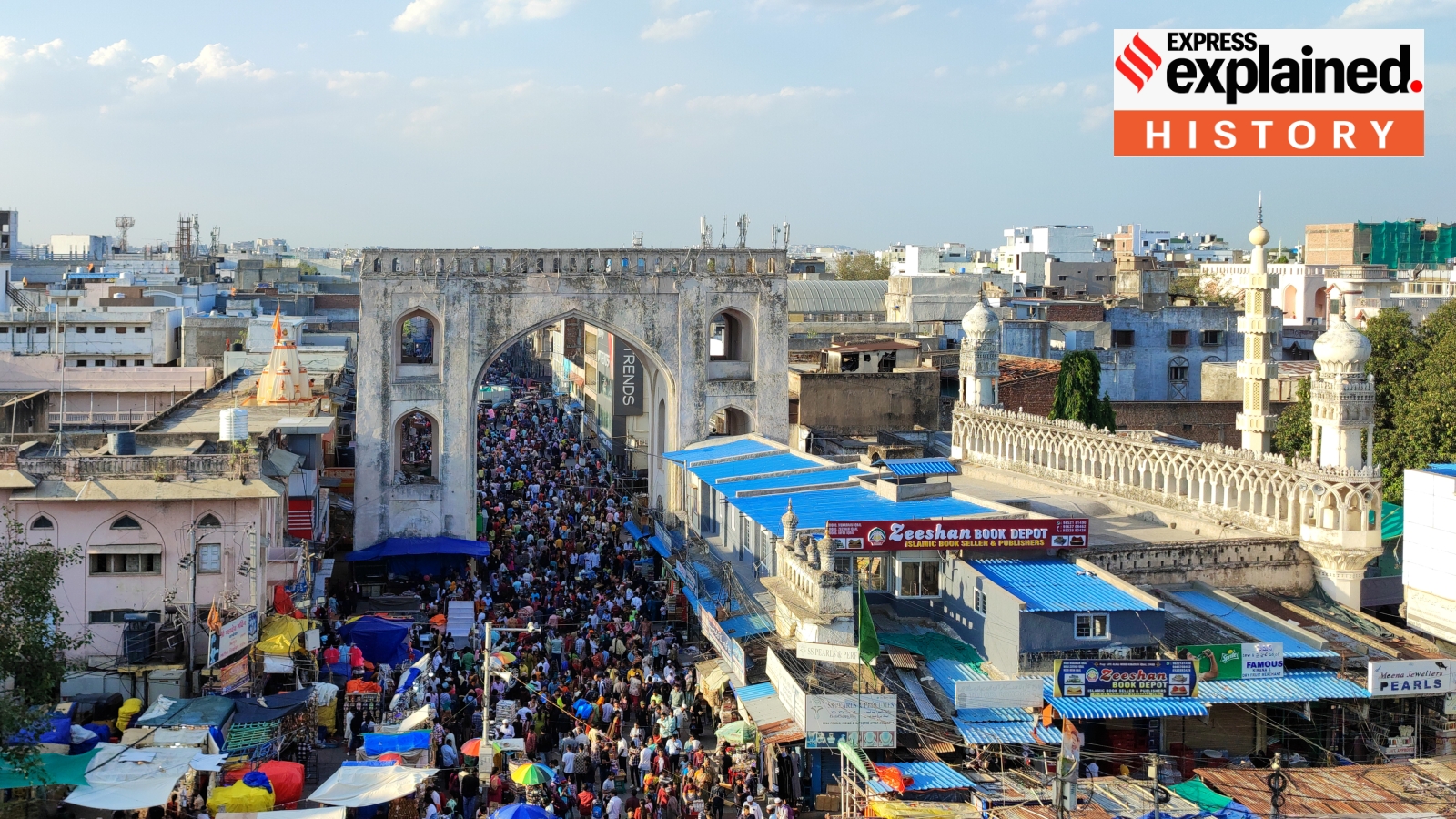
 A view of the Charminar Kaman, the arch to the south. Photo: Wikimedia Commons
Hyderabad is known for its iconic Charminar, the structure which falls in the Old City and bears the signature of the Qutb Shahi dynasty’s architectural majesty. But what’s lesser known are the four ornamental gateways that lead to the Charminar, called the Char Kaman.
The Telangana government has announced that the gateways will soon get a facelift. Here’s what to know about its history and the restoration plans.

History and significance of Char Kaman
The Charminar was built between 1589 and 1591 by Muhammad Quli Qutb Shah, the fifth ruler of the Qutb Shahi dynasty. According to Mohammed Safiullah, a Hyderabad historian and honorary managing trustee of Deccan Heritage Trust, the Kamans could have been built around 1594.
The 20th century historian Syed Ali Asghar Bilgrami writes that after the completion of the Charminar, Shah commissioned the construction of four ornamental arches or gateways around the Charminar.
According to Bilgrami’s book Landmarks of Deccan (1927), the four arches had names differing from their present nomenclature. The west arch was first named Daulat Khanae Ali, or the gate of the royal residence; whereas the one on the east was named Naqqar Khana, or gate of the palace where drums are beaten.
“Generally the central area of the four arches was termed Jilau Khana or the royal vestibule,” Bilgrami writes.
The Kaman to the north under which “a huge elephant with a canopied litter can easily pass” were later called Machli Kaman, or the fish arch. This is because, Bilgrami writes, “a big fish made of bamboo and paper resembling a miniature aeroplane is suspended in the centre of the arch on every lunar new year”.
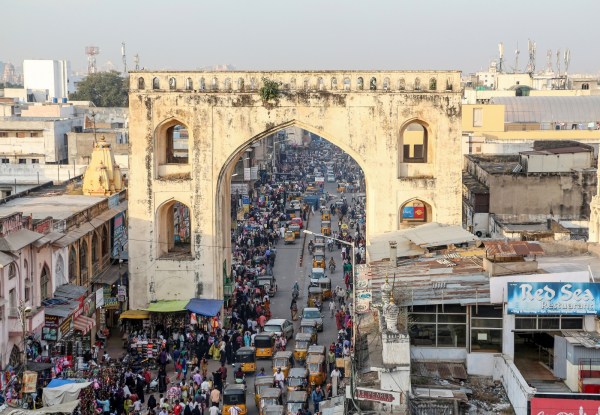 One of the Char Kaman as seen from the Charminar in Hyderabad. Photo: Wikimedia Commons
The rest of the arches were called Charminar Kaman (south); Kali Kaman or Kaman of Shambhoo Pershad (east), which stands for the black arch; Kaman Sher Dil or Sihr Batil (west), meaning gateway for the lion hearted or the magic breaker. These names are still in use in Hyderabad.
Bilgrami writes: “Formerly the Qutub Shahi palaces were situated towards the western arch, but the relentless hand of time has totally obliterated them.” The arches marked the entrances to the city of Hyderabad. According to Bilgrami, the arches saw immense traffic during the Qutb Shahi period as “the adjoining outhouses were used as a sitting place for the nobles and officials. These noblemen used to come every morning with their retinue and attendants and after reaching the royal vestibule which was in the centre of the four arches, the suite and retinue were left behind and they used to proceed unattended for the audience of the king.”
Restoration plans
The restoration work is expected to focus on structural repairs and conservation of heritage features. The work would aim to improve the overall condition of the monuments while retaining their historical character. Heritage conservationists have long called for the preservation of the Char Kaman, pointing to the damage caused over the years by growing urbanisation and resultant pollution.
Hyderabad MP Asaduddin Owaisi announced last week that the restoration project has received a major boost, with the government granting administrative sanction to invite tenders and appoint a consultant for the work.
“Happy to share that Hyderabad’s four gateways (kamaan) will soon be repaired and restored. The government has granted administrative sanction for inviting tenders and appointing a consultant for the work,” he wrote on X.
